New Dog Owners
What do I need before getting a puppy
What you need
A few essentials (crate, pen, food, bowls, lead, harness, ID, basic toys, cleaner), a puppy-proofed space, and a schedule for the first two weeks where someone is home most of the time.
Why prep matters
Puppies need toilet trips every one to two hours, cannot be left alone for long, and learn fastest in their first few months. Sorting the basics before pickup means you spend week one bonding and house-training, not running to the pet shop.
Most common slip-up
Treating the day as just a shopping run. Buying the right gear is easy. The harder parts are setting up confined spaces, blocking out time off work, and agreeing on the rules with everyone in the house.
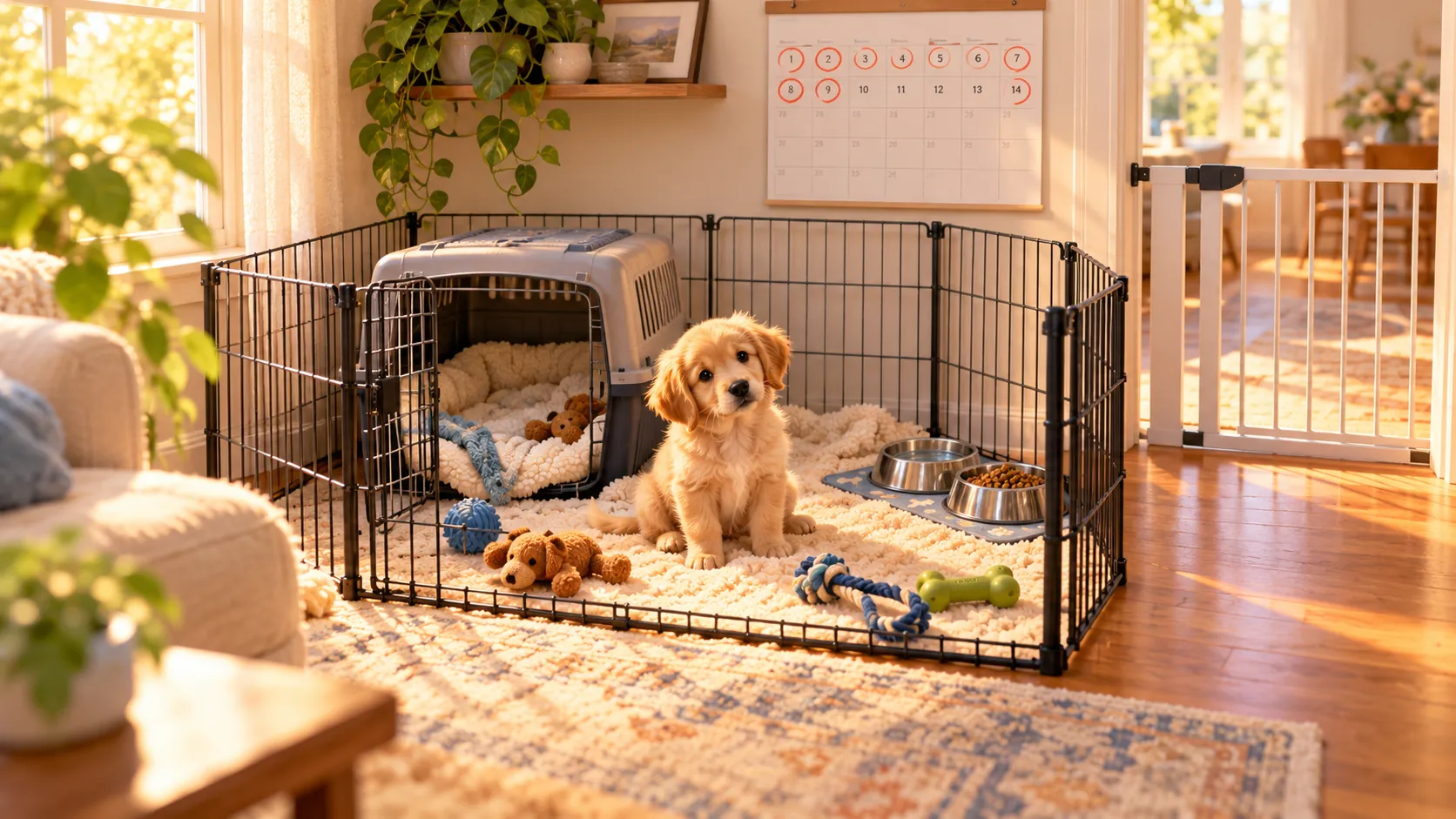
A confined space, set up before pickup.
A crate plus a small pen or gated room is what makes house-training work. The puppy sleeps in the crate, plays and rests in the pen, and goes outside (or onto a pad) on a regular schedule. Without a defined space, accidents and chewing are far harder to manage.
Time off, or someone home, for the first one to two weeks.
A young puppy needs frequent toilet breaks, short feeds, naps, and quiet company. A normal full workday with no one home does not work for a puppy under about four months. Plan leave, working from home, or a sitter before you commit to a pickup date.
The basic supplies — and not much more.
A short, sensible shopping list sees you through the first month. Most pet-shop wish-lists include a lot of things you do not need yet, and some things (like designer collars or memory-foam beds) you will regret buying before the puppy has chewed their first one.
Ready to set up the house?
Open the Pre-arrival puppy checklist →Next in Pre-acquisition
Frequently asked questions
- How much time off work do I need?
- Aim for at least one full week, ideally two, with someone home most of the day. After that, plan for the puppy not to be alone for more than one to two hours at a time for the first month or so.
- Can I leave a puppy alone during a normal workday?
- Not at first, and not all day until they are at least six months old. A young puppy can hold their bladder for roughly an hour per month of age. If your schedule means long stretches with no one home, line up a dog walker or a midday sitter before pickup.
- Do I really need a crate?
- Most owners find a crate is the easiest way to manage sleep and house-training. Used well, it gives the puppy a calm space to rest and helps them learn to settle. If you would rather use a pen or a small gated room as the sleeping space, that can also work — the key is having some kind of confined area, not improvising room by room.
- What food should I buy?
- Whatever the breeder or shelter is currently feeding, in a small bag. Stay on it for the first week, then switch to your preferred food gradually over seven to ten days. Any well-known puppy food labelled as complete and balanced is nutritionally fine.
- Is pet insurance worth it?
- It depends on your budget and how you'd handle a $4,000–$8,000 vet bill. Insurance pays off most reliably for emergencies and chronic conditions; routine care is rarely worth insuring. If you're going to enrol, do it before any condition shows up in the vet record. Some owners prefer to skip insurance and put a fixed amount each month into a savings buffer instead.
- When can I start training?
- From day one, in short, gentle sessions of a couple of minutes — name recognition, sit, gentle handling of paws and ears, getting comfortable in the crate. Keep it relaxed and rewarding. Formal classes usually start around 9–12 weeks of age.
- When can the puppy meet other dogs and go for walks?
- You can start carrying the puppy out and about right away — the new sights, sounds, and people are all helpful. Putting the puppy down on shared ground (parks, pavements outside busy shops) is best held off until vaccinations are complete, usually around 16 weeks. Friendly, healthy adult dogs you know are fine to introduce in your home or garden in the meantime.
- What's the most common thing first-time owners forget?
- Setting up the pen and the puppy-proofed room before pickup, and stocking up on enzymatic cleaner. Both make week one substantially easier.