Training · Core Obedience
Heel and Loose-Leash Walking
Separates formal heel from practical leash manners for daily walks.
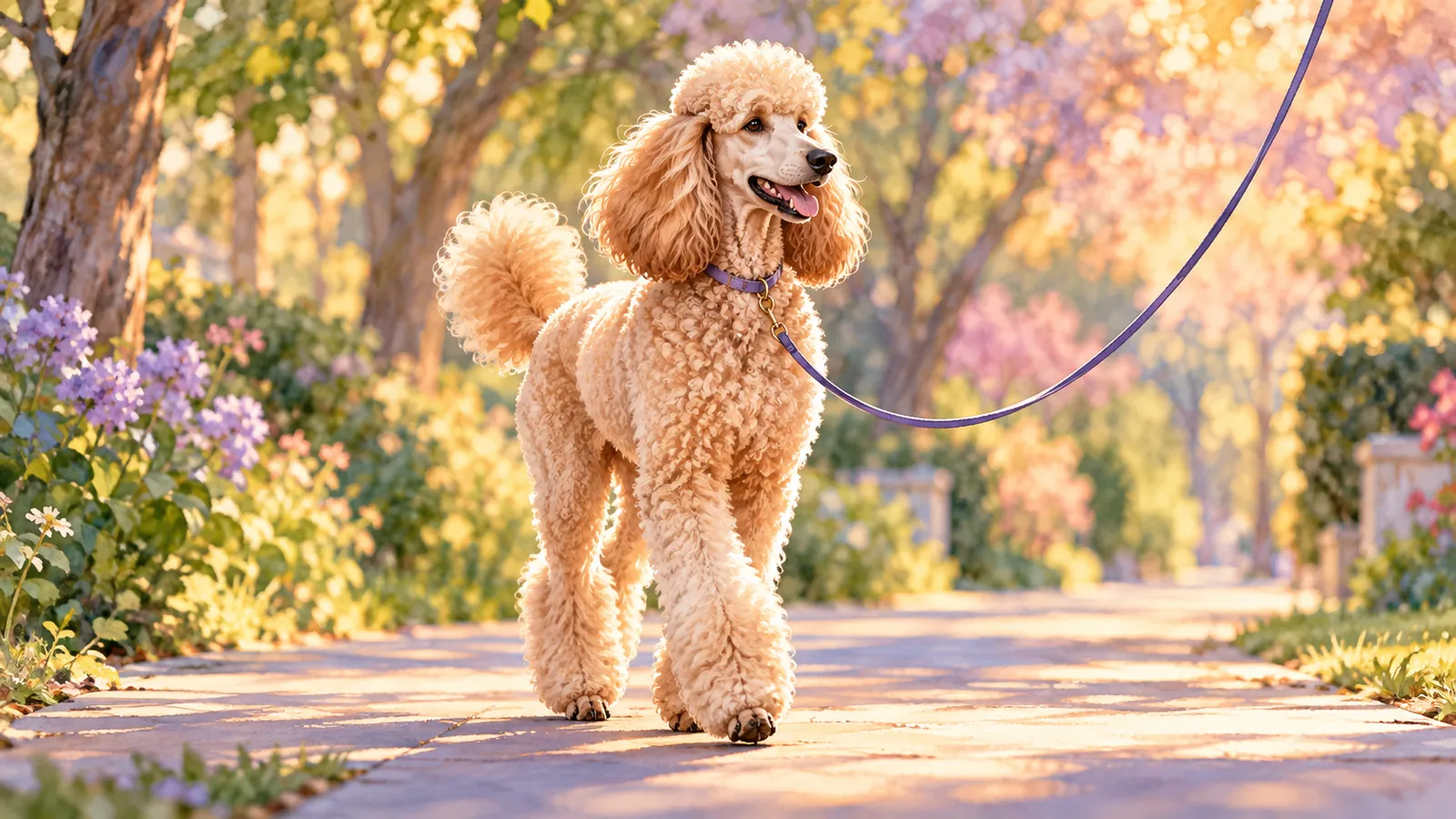
Loose-leash walking and heel are often confused, but they are different skills. Loose-leash walking means your dog can move around, sniff, and change sides — as long as the leash stays slack. Heel is a precise position at your side, used for short stretches such as crossing a road or passing another dog.
Most families need loose-leash walking most of the time, and heel occasionally. Teaching them as separate behaviors, with separate cues, stops your dog from being confused about what is expected.
Dogs pull because pulling works: it gets them where they want to go. The key is to make a slack leash the thing that moves you forward, and to reward your dog generously for being near you.
Use a well-fitted harness with a front clip if your dog pulls strongly. Avoid choke chains, prong collars, and leash jerks — they cause pain and neck injuries and can make reactivity worse.
What this command is
Loose-leash walking: dog walks without pulling. Heel: dog walks close to your side, matching your pace.
Why it matters: Good leash manners make walks enjoyable, safer on busy streets, and easier on your shoulder and your dog's neck.
- Verbal cues:
- heel, let’s go, with me
- Hand signal:
- Tap your leg on the side you want the dog.
- Supplies:
- 1.5-2 m leash, well-fitted harness (front clip for strong pullers), plenty of small treats, treat pouch
- Age:
- Any age, with short sessions for young dogs.
- Physical suitability:
- Use a harness rather than a collar for dogs that pull, to protect the neck and throat — especially for small and brachycephalic breeds.
Training steps
1.Reward the right spot indoors
In a quiet room, walk around with your dog on or off a leash. Every time it is next to your leg, mark and deliver a treat right at your leg.
Success: Dog hangs around your side as you move.
Typical time: 2-3 sessions
2.Stop when the leash goes tight
On the leash, walk forward. If the leash tightens, stop and stand still. When the dog turns back or the leash slackens, mark, reward at your side, and walk on.
Success: Dog starts checking back to keep the leash slack.
Typical time: 4-8 sessions
3.Change direction
If your dog forges ahead, calmly turn and walk the other way. Reward when it catches up to your side.
Success: Dog stays with you through turns and pace changes.
Typical time: 4-8 sessions
4.Teach heel as a separate position
Lure your dog into position next to your leg, say "heel", take one step, reward. Build to 5, 10, then 20 steps, rewarding often. Release with "free" when heel is over.
Success: Dog walks at your side for 20 steps on cue.
Typical time: 1-2 weeks
5.Take it outside
Start in quiet streets at quiet times. Reward frequently, and let your dog sniff as a reward for walking nicely.
Success: Dog walks on a loose leash on your usual route.
Typical time: 2-6 weeks
Common mistakes
Following the dog when it pulls
Why it happens: You want to get the walk done
Fix: Pulling only works if it gets the dog forward. Stop or change direction every time, especially early on.
Walking too long between rewards
Why it happens: Expecting too much too soon
Fix: Reward every few steps at first, then gradually stretch the gaps.
Expecting heel for the whole walk
Why it happens: Mixing up the two skills
Fix: Use loose-leash walking for most of the walk and heel only when you need it.
Leash corrections
Why it happens: Common advice from older methods
Fix: Jerks cause pain and neck injuries and can create fear. Reward the slack leash instead.
Troubleshooting
Dog surges ahead at the start of every walk
Likely cause: Built-up excitement
Remedy: Practise in the garden or driveway first, or let the dog sniff and settle before starting.
Dog walks nicely at home but pulls outside
Likely cause: Distractions are far more rewarding outside
Remedy: Use higher-value treats, reward more often, and start in quiet areas.
Dog lunges at other dogs or people
Likely cause: Excitement, frustration, or fear
Remedy: Create distance and reward calm behavior. Work with a qualified trainer if this happens often.
Dog zigzags in front of you
Likely cause: Rewards delivered in front of your body
Remedy: Deliver treats right at your side, on the side you want the dog to walk.
Proofing: making it reliable
Treat walks as training for the first few weeks: shorter distances, more rewards, and quieter routes. Add harder routes gradually, and let your dog have "sniff breaks" as a reward for good walking.