Training · Core Obedience
Place / Go to Mat
A location cue for calm stationing during guests, meals, and routines.
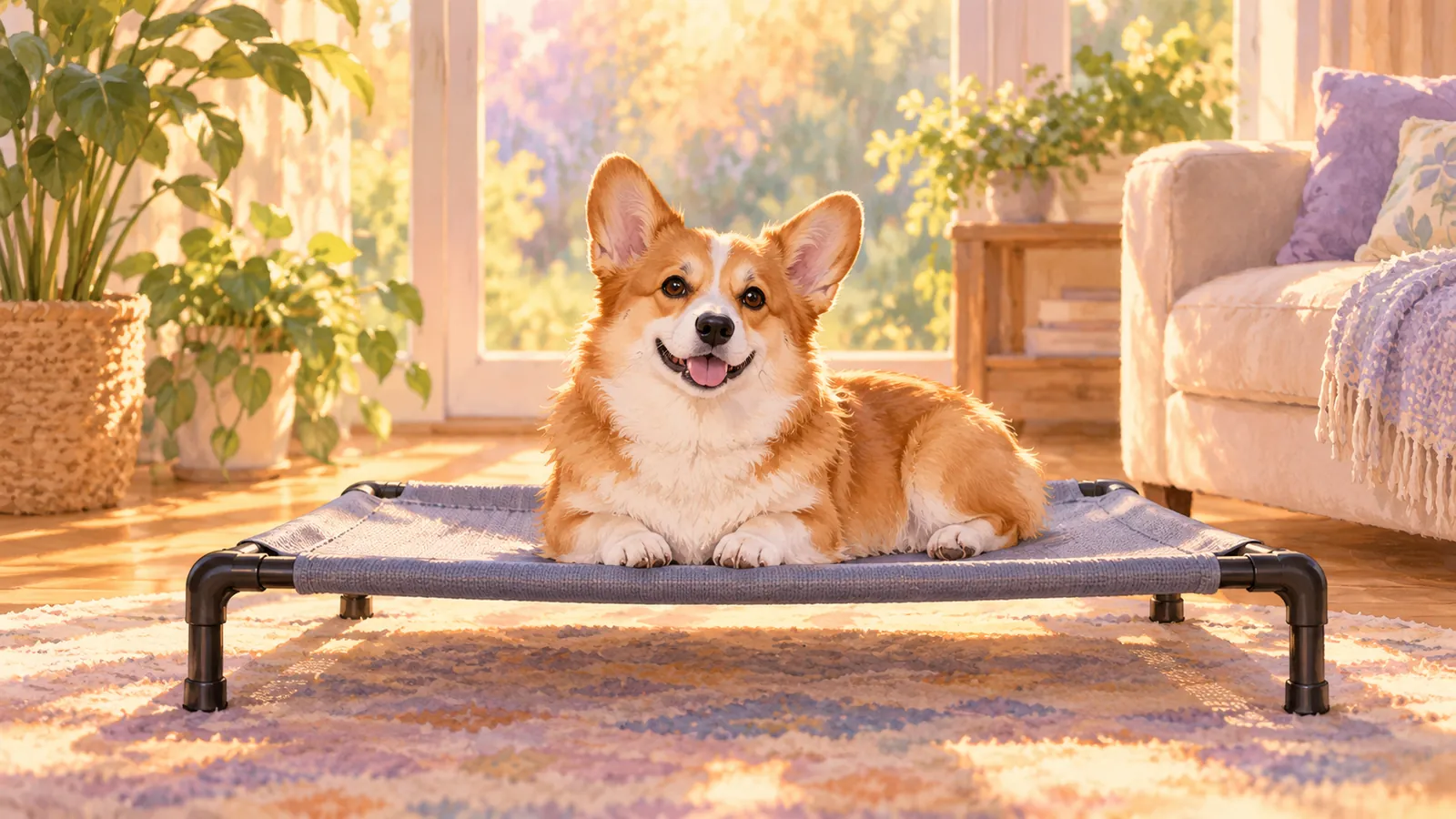
Place teaches your dog to go to a specific spot — a mat or bed — and relax there until released. It is one of the most useful household behaviors: at the door when guests arrive, during meals, while you cook, or at a café.
The goal is not just to stay on the mat but to settle and relax. A dog that lies calmly on its mat is practising being calm, which carries over into other situations.
Because the mat is portable, you can take it with you. Dogs that know place often settle much faster in new environments like holiday homes, friends' houses, and vet waiting rooms.
What this command is
Dog goes to a designated spot, lies down, and stays there until released.
Why it matters: Place is a practical impulse-control skill for doors, guests, meal times, and settling in new places.
- Verbal cues:
- place, mat, bed
- Hand signal:
- Point to the mat.
- Prerequisites:
- A reliable down is helpful
- Supplies:
- a mat or raised bed, treats, optional long-lasting chew
- Age:
- Any age.
- Physical suitability:
- Choose a comfortable surface for long settles. Raised beds help dogs with joint pain.
Training steps
1.Reward interest in the mat
Put the mat down. Mark and reward when your dog looks at it, then steps near it, then puts a paw on it, then stands on it. Toss the treat off the mat to reset.
Success: Dog walks onto the mat without prompting.
Typical time: 1-2 sessions
2.Add the down
Once the dog is stepping onto the mat, ask for a down, then reward on the mat. Soon, only reward when the dog lies down by itself.
Success: Dog goes to the mat and lies down.
Typical time: 1-3 sessions
3.Add the cue
Say "place" just before the dog heads to the mat. Start from a step or two away, then build distance.
Success: Dog goes to the mat on cue from across the room.
Typical time: 2-4 sessions
4.Build duration and relaxation
Drop treats between your dog's paws at intervals while it stays on the mat, stretching the gaps over time. Reward relaxed signs such as hip rolled to one side or head on paws. Release with your release word.
Success: Dog stays relaxed on the mat for several minutes.
Typical time: 1-2 weeks
5.Use it in real life
Practise with the doorbell, during your meals, and with a long-lasting chew during longer periods. Take the mat to new places.
Success: Dog settles on the mat during real household moments.
Typical time: Ongoing
Common mistakes
Forgetting to release
Why it happens: The dog is settled, so you get on with your day
Fix: Always release, even after long settles, or the dog will learn to decide for itself.
Starting with the doorbell
Why it happens: It is the problem you want solved
Fix: Build a strong place in calm moments first, then add a knock at low volume, then the real doorbell.
Using the mat for punishment or time-outs
Why it happens: Convenient
Fix: The mat should always be a good place to be.
Troubleshooting
Dog leaves the mat repeatedly
Likely cause: Duration is too long for the current stage
Remedy: Shorten the time and reward more frequently while the dog is on the mat.
Dog stands on the mat but won't lie down
Likely cause: Surface is uncomfortable or the dog is too excited
Remedy: Try a softer mat, practise when the dog is tired, and reward any relaxation.
Dog races off the mat when the doorbell rings
Likely cause: The doorbell is a huge distraction
Remedy: Practise with recorded doorbell sounds at low volume, and have a helper ring while you reward.
Proofing: making it reliable
Practise with the mat in different rooms, then take it on visits. Pair longer settles with a chew or lick mat to help your dog relax, and gradually reduce how often you drop treats.