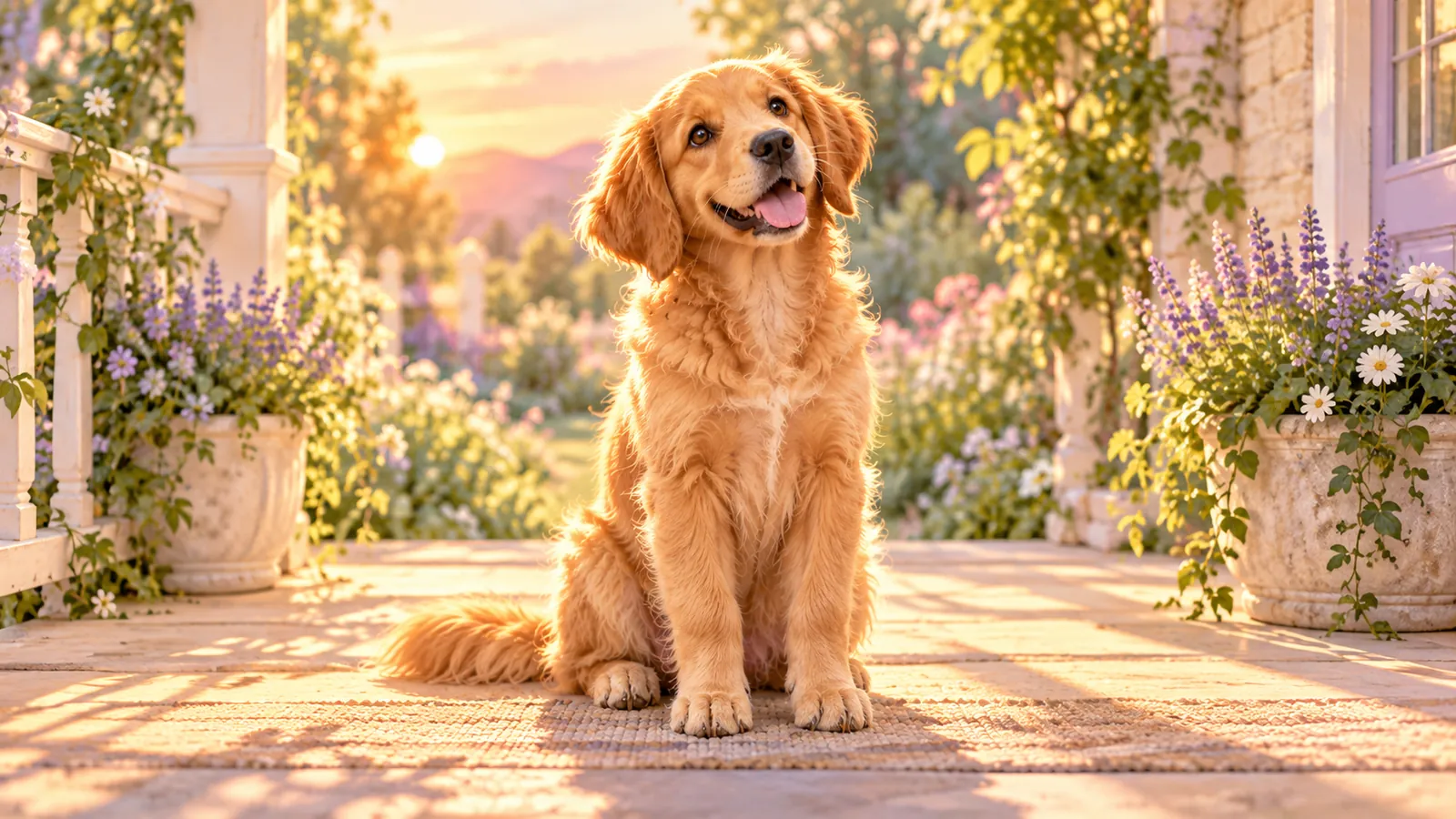
Training · Core Obedience
Sit
The universal starter behavior and a prerequisite for many tricks.
Sit is often the first cue a dog learns fluently. It is easy to lure, easy to reward, and gives you a calm, repeatable starting position for almost everything else.
Beyond being a party piece, sit is a polite default. A dog that sits to say hello cannot jump up at the same time; a dog that sits before its bowl goes down is practising impulse control twice a day without you planning a session.
Most dogs pick up the lured version within a session or two. The real work is fading the food from your hand, getting a sit on one cue rather than three, and making it reliable in new places. That is what the steps below focus on.
Teach a release word (such as "free" or "OK") alongside sit, so your dog learns that sit lasts until you say otherwise rather than until it gets bored.
What this command is
Dog lowers its rear to the floor and stays seated until released or given another cue.
Why it matters: Sit is a control anchor for daily life — greetings, doors, meals, kerbs — and the entry point to stay, down, and many trick setups.
- Verbal cues:
- sit
- Hand signal:
- Open palm facing up, lifted from waist height toward your chest.
- Supplies:
- small soft treats, optional marker word or clicker
- Age:
- Any age. Puppies can start at 8 weeks with 2-3 minute sessions.
- Physical suitability:
- Low-impact and safe for almost all dogs. Dogs with hip or back pain may sit slowly or crookedly, or prefer to stand — a sudden reluctance to sit is worth a vet check.
Training steps
1.Lure into position
Hold a treat at your dog's nose, then slowly move it up and slightly back over its head. As the head goes up, the rear goes down. Mark ("yes") the instant the rear touches the floor, then give the treat.
Success: Dog follows the lure into a sit 8 out of 10 times.
Typical time: 1-2 sessions
2.Fade the food lure
Make the same hand movement with no treat in that hand. Mark the sit and reward from your other hand or a pouch. After a few successful reps, make the hand movement smaller until it becomes your hand signal.
Success: Dog sits to an empty-hand signal.
Typical time: 1-3 sessions
3.Add the verbal cue
Say "sit" once, pause for a second, then give the hand signal. Over repetitions the dog starts sitting as soon as it hears the word. Mark and reward extra generously for sits that happen before the hand moves.
Success: Dog sits on the verbal cue alone within about 2 seconds.
Typical time: 2-4 sessions
4.Add a release and a little duration
Ask for the sit, wait 1-2 seconds, reward while the dog is still sitting, then say your release word and encourage it up. Gradually stretch the pause to 5-10 seconds.
Success: Dog stays sitting until released.
Typical time: 2-4 sessions
5.Take it on the road
Practise in other rooms, the garden, on walks, and before daily life rewards like the door opening or the bowl going down.
Success: Dog sits on one cue in at least three different places.
Typical time: 1-2 weeks of everyday practice
Common mistakes
Repeating the cue ("sit, sit, SIT")
Why it happens: The dog is slow to respond and it feels natural to keep asking.
Fix: Say it once. If there is no sit within a few seconds, help with the hand signal, reward, and make the next rep easier.
Pushing down on the dog's rear
Why it happens: It seems like a shortcut.
Fix: Pressure makes many dogs push back and can hurt sore hips. Lure instead and let the dog work it out.
Holding the lure too high
Why it happens: Handler lifts the hand above the head.
Fix: Keep the treat just above the nose. Too high and the dog jumps up to get it.
Never fading the food from the hand
Why it happens: The lure works, so it feels risky to remove it.
Fix: Start empty-hand reps by the second or third session so the hand signal, not the food, becomes the cue.
Troubleshooting
Dog backs up instead of sitting
Likely cause: Lure moves too far back or the dog has space behind it
Remedy: Keep the lure closer to the nose, or practise with the dog's back to a wall or a corner.
Dog jumps at the treat
Likely cause: Lure too high, or the dog is overexcited
Remedy: Lower the lure, move more slowly, and use a lower-value treat.
Dog pops up immediately after sitting
Likely cause: No duration built yet, or rewards arrive after the dog stands
Remedy: Deliver the treat to the dog while it is still sitting, and add a release cue.
Sits at home but not outdoors
Likely cause: Behavior has not been generalised
Remedy: Go back to an easy outdoor spot with higher-value rewards and build up.
Proofing: making it reliable
Once your dog sits on one cue indoors, practise with you standing, sitting, and facing away; with a person walking past; in the garden; and on a quiet walk. Change one thing at a time and go back to rewarding every rep when you make it harder.