Training · Core Obedience
Wait (Doors and Thresholds)
Threshold pause cue for safety and everyday impulse control.
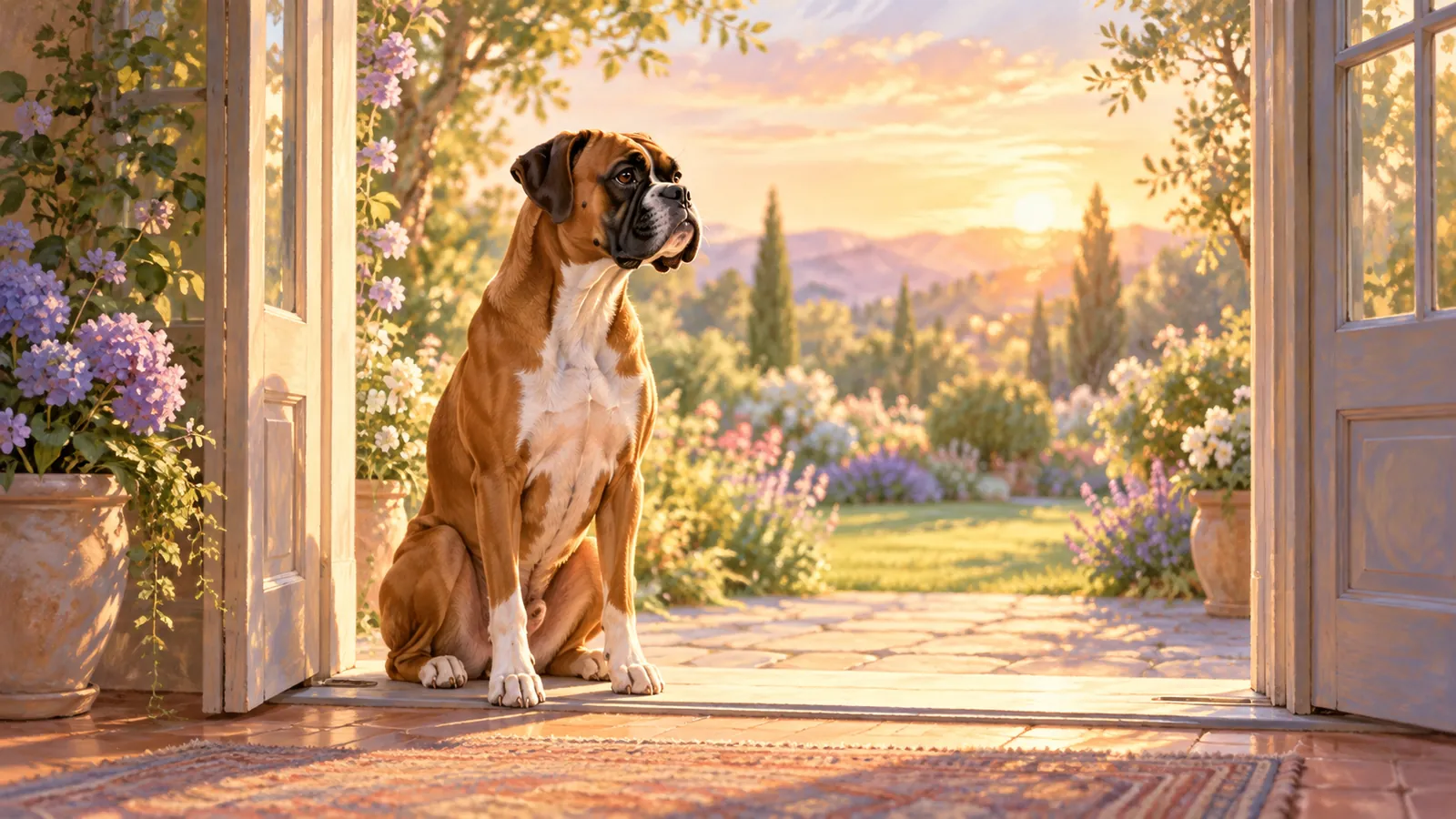
Wait asks your dog to pause for a moment — at the front door, the car door, a gate, or before its food bowl goes down — until you say it can go.
Wait and stay are related but different. Stay means "hold this position until I come back and release you". Wait means "pause here for a moment; I'll let you know when to continue", and your dog doesn't need to hold a specific position.
Wait is one of the most practical safety behaviors you can teach. A dog that bolts through the front door or leaps out of the car can end up in traffic in seconds.
The best way to teach it is to make the door itself the reward: the door opens when the dog waits, and closes when it moves.
What this command is
Dog pauses at doors, gates, car doors, or before its food bowl until given permission to go.
Why it matters: Wait prevents door-dashing and car-leaping, and builds everyday impulse control.
- Verbal cues:
- wait
- Hand signal:
- Brief flat palm toward the dog at the threshold.
- Supplies:
- treats, a door or gate, a leash for outside doors
- Age:
- Any age.
- Physical suitability:
- No special physical restrictions.
Training steps
1.Use the door as the reward
With your dog on a leash at an inside door, start to open it. If the dog moves forward, close it calmly. When the dog pauses, open it a little more. Repeat until you can open it fully while your dog holds back.
Success: Dog holds back as the door opens.
Typical time: 1-2 sessions
2.Add the cue and release
Say "wait" before you reach for the handle. When the door is open and your dog is still waiting, give your release word and walk through together.
Success: Dog waits on cue until the release.
Typical time: 1-3 sessions
3.Practise at the food bowl
Say "wait" and lower the bowl. If the dog moves forward, lift it back up. When the bowl reaches the floor and the dog is still waiting, release.
Success: Dog waits for the release before eating.
Typical time: 2-4 meals
4.Front door and car
Practise at the front door and the car, always with your dog on a leash for safety. Vary how long you ask your dog to wait before releasing.
Success: Dog waits at every exit until released.
Typical time: 1-2 weeks
Common mistakes
Using wait and stay interchangeably
Why it happens: The cues sound similar
Fix: Keep wait short and practical, and stay for longer holds that you return to release.
Practising at the front door off-leash
Why it happens: Confidence after indoor practice
Fix: Always use a leash at outside doors until your dog's wait is extremely reliable.
Always releasing after the same pause
Why it happens: Routine
Fix: Vary the length so your dog waits for the release word instead of guessing.
Troubleshooting
Dog anticipates the release
Likely cause: Release timing is predictable
Remedy: Vary hold times and occasionally close the door and reward the wait instead of opening.
Dog squeezes through the gap
Likely cause: Door opening too fast or too wide
Remedy: Open more slowly and close before the dog reaches the gap.
Dog waits at home but not at the car
Likely cause: Behavior has not been generalised; the car is very exciting
Remedy: Practise at the car when you are not going anywhere, with the dog on a leash.
Proofing: making it reliable
Use wait at every door, gate, and car door every day. Occasionally have a helper open the front door while your dog waits on a leash, to simulate visitors and deliveries.