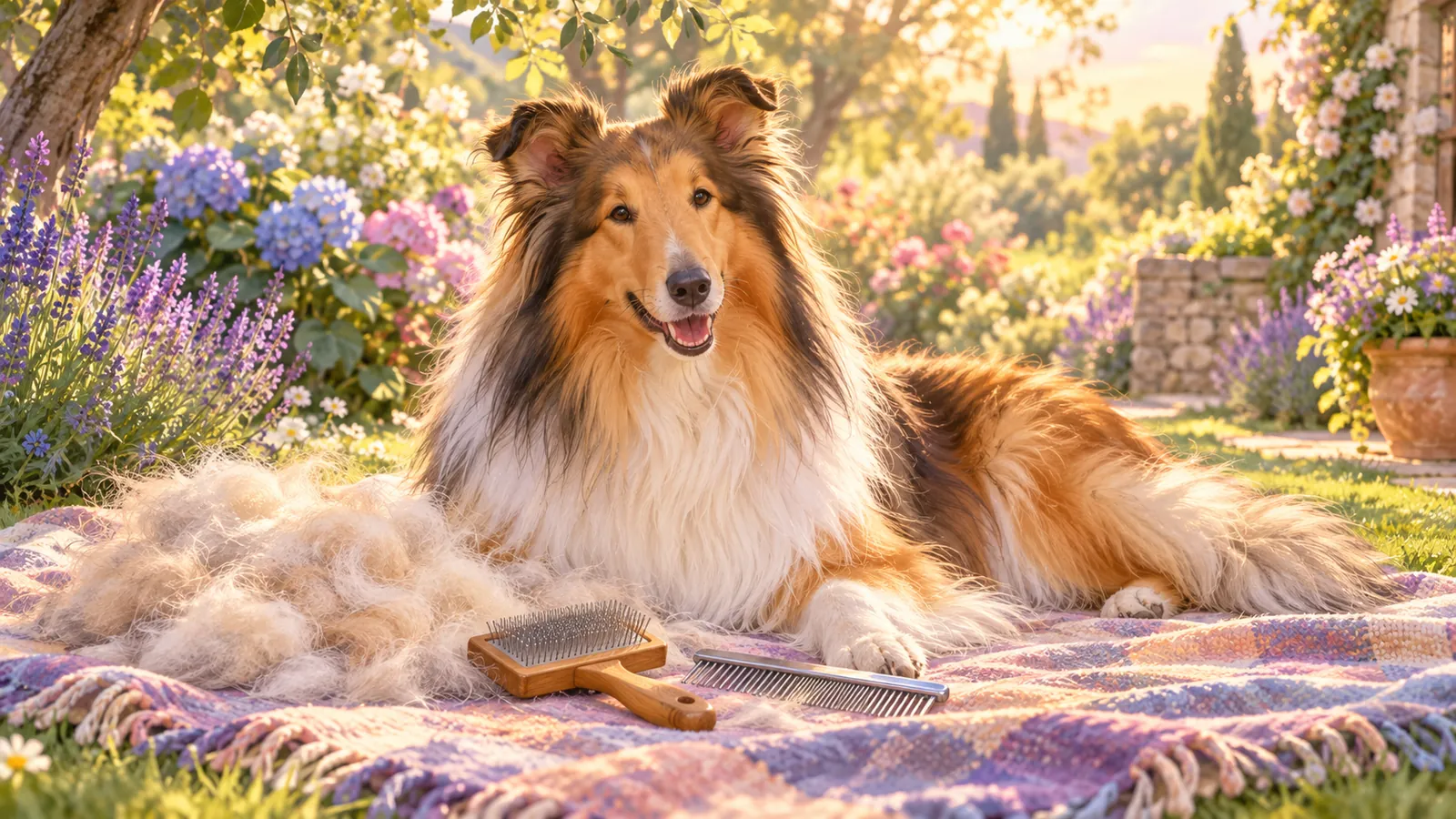
Grooming · Coat, Skin, and Paw Care
Brushing
Coat-maintenance fundamentals with coat-type tool and cadence guidance.
Brushing removes loose fur and dirt, spreads the natural oils that keep a coat healthy, and prevents mats. It is also the best chance you have to check your dog's skin for lumps, ticks, fleas, and sore spots.
How often you brush and which tools you use depend almost entirely on coat type. A short, smooth coat may need a quick weekly once-over; a curly or long coat can mat within days if it is left.
The most common mistake is brushing only the top layer. A dog can look neat on the surface while mats form against the skin underneath. For thick, long, and curly coats, brush in layers and finish with a comb that reaches the skin.
Keep sessions short and rewarding. Brushing should feel like a massage, not a tug of war.
Care details
A regular brushing routine, with tools and frequency chosen by coat type.
Difficulty: Easy
Estimated time: 5-30 minutes
Frequency: Smooth coats: weekly. Double coats: 2-3 times a week, daily when shedding. Long, curly, and wire coats: daily or every other day.
Also called: coat brushing, dog brushing routine
Supplies: smooth coats: rubber curry brush or bristle brush, double coats: undercoat rake and slicker brush, long or curly coats: slicker brush, pin brush, and a metal comb, optional detangling spray, treats
Breed / coat: Smooth (labradors, beagles, boxers): a rubber brush lifts loose hair. Double (huskies, shepherds, golden retrievers): an undercoat rake removes shedding undercoat — do not shave these coats unless your vet advises it. Long (shih tzus, yorkies, setters): pin brush and comb, focusing on behind the ears and under the legs. Curly (poodles, doodles, bichons): slicker brush and comb, brushing in sections down to the skin. Wire (terriers, schnauzers): slicker brush, plus professional hand-stripping or clipping.
Age: Short, gentle sessions for puppies — the aim is to build acceptance. Seniors may have thinner skin and sore joints, so use softer tools and let them lie down.
Why it matters: Controls shedding, prevents mats, keeps skin healthy, and helps you spot problems early.
How to do it
1.Know your coat type
Identify whether your dog has a smooth, double, long, curly, or wire coat, and choose tools to match (see supplies).
Done right: You have the right brush and comb for your dog's coat.
Time: Once
2.Start with a quick check
Run your hands over your dog to feel for mats, lumps, or sore spots.
Done right: You know which areas need extra care.
Time: 1 minute
3.Brush in sections
Work in small sections from head to tail, brushing in the direction the hair grows. For thick coats, hold the top layer up with one hand and brush the layer underneath ("line brushing").
Done right: Brush moves smoothly through each section.
Time: 5-20 minutes
4.Check with a comb
Run a metal comb through the coat down to the skin. Pay extra attention to behind the ears, armpits, collar area, and back legs.
Done right: The comb goes through to the skin without catching.
Time: 2-5 minutes
5.Inspect and reward
Check the skin as you go, then finish with a treat.
Done right: Coat is tangle-free and the dog is relaxed.
Time: 1 minute
Safety notes
Slicker brushes can scratch skin if pressed too hard — use a light touch. Never cut mats out with scissors close to the skin, as it is very easy to cut the skin. Stop if your dog shows pain.
When to get help
Tight mats close to the skin, pain when brushed, bald patches, redness, sores, lumps, or parasites.
Common mistakes
Using the wrong tool
Why it happens: Buying one brush for everything
Fix: Match the brush to the coat type. A bristle brush will not reach a double coat's undercoat.
Brushing only the surface
Why it happens: The coat looks neat on top
Fix: Brush in layers and check with a comb down to the skin.
Brushing too hard
Why it happens: Trying to get through tangles quickly
Fix: Use light strokes and work mats out gradually from the tips.
Shaving a double coat
Why it happens: Hoping to reduce shedding or heat
Fix: Double coats help regulate temperature and may grow back poorly. Brush out the undercoat instead.
Troubleshooting
Dog wriggles away from the brush
Likely cause: Discomfort or boredom
What to do: Keep sessions short, use a softer tool, and reward generously.
Mats keep forming
Likely cause: Brushing too infrequently or only on the surface
What to do: Brush more often and line brush down to the skin.
Tight mats against the skin
Likely cause: Coat has been left too long
What to do: Ask a groomer to clip them out safely rather than cutting them yourself.