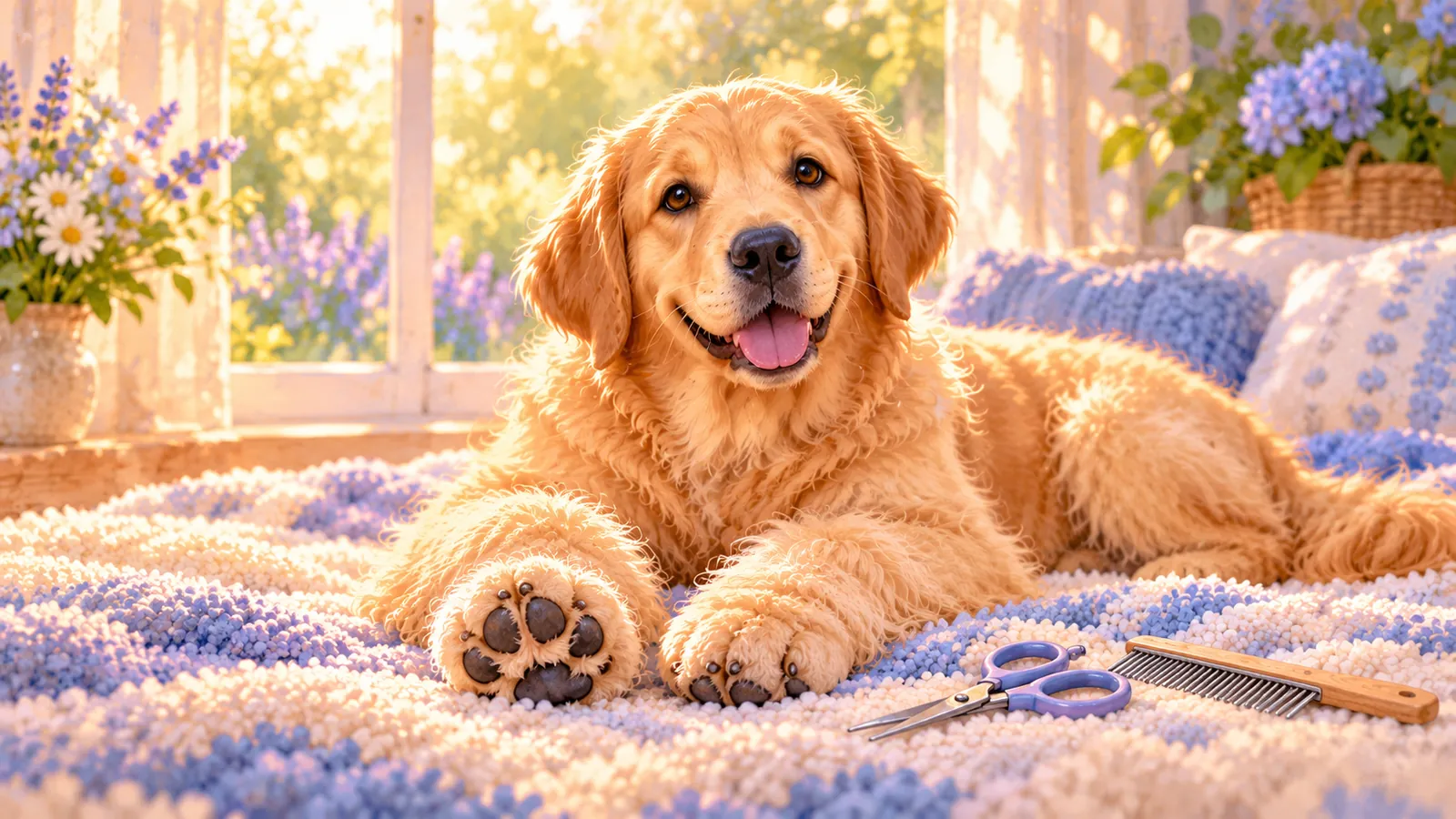
Grooming · Coat, Skin, and Paw Care
Paw Grooming
Trim and inspect paw fur for traction, cleanliness, and early issue detection.
Paw grooming means trimming the fur that grows between and around the pads, and tidying the fur around the foot. It matters most for long-coated and double-coated dogs, whose paw fur can grow long enough to cover the pads.
Overgrown paw fur makes dogs slip on hard floors, collects mud, ice balls, and grass seeds, and makes it hard to see what is going on underneath. For older dogs, better grip can make a real difference to confidence and mobility.
The goal is modest: fur level with the pads, not shaved down to the skin. A conservative trim every few weeks with rounded-tip scissors or a small trimmer is all most dogs need.
The skin between the toes is thin and easy to nick, so good light, a relaxed dog, and slow, careful cuts matter more than speed.
Care details
Maintenance trimming of fur around and between the paw pads, with an inspection of each foot.
Difficulty: Moderate
Estimated time: 10-20 minutes
Frequency: Every 2-4 weeks, depending on coat growth and activity.
Also called: paw trim, paw pad trim
Supplies: rounded-tip grooming scissors or a small quiet trimmer, a fine-toothed comb, non-slip mat, good lighting, treats
Breed / coat: Most useful for long-coated and double-coated breeds (spaniels, setters, golden retrievers, shepherds, doodles, poodles). Short-coated breeds rarely need it.
Age: Start handling paws early so puppies accept it. For seniors, trimming paw fur improves grip on smooth floors — pair it with rugs or runners where they walk.
Why it matters: Improves traction, reduces debris and matting, and makes paw problems easier to spot.
How to do it
1.Position calmly
Have your dog lie on its side on a non-slip mat, or stand, in good light. Give a treat as you pick up each paw.
Done right: Dog is relaxed with the paw in your hand.
Time: 1-2 minutes
2.Comb the fur out
Comb the paw fur so it stands away from the pads and you can see the pad edges clearly.
Done right: Fur is detangled and the pads are visible.
Time: 1 minute per paw
3.Trim level with the pads
With the scissors held flat against the pads, trim the fur that sticks out beyond them. Take small snips rather than one big cut.
Done right: Fur is level with the pads, not below them.
Time: 1-2 minutes per paw
4.Tidy around the foot
Trim any long fur around the edge of the foot to give a neat, rounded shape.
Done right: The foot has a tidy outline and no fur drags on the floor.
Time: 1 minute per paw
5.Inspect and reward
Check the pads and the skin between the toes, then reward your dog.
Done right: You have checked all four paws.
Time: 1-2 minutes
Safety notes
Always use rounded-tip scissors, keep the blade parallel to the pad, and never dig between the toes. Stop if your dog is struggling. If you cut the skin, apply gentle pressure and call your vet if it keeps bleeding or looks deep.
When to get help
Matting close to the skin, persistent redness or swelling between the toes, cuts that won't stop bleeding, or ongoing slipping despite trimming.
Common mistakes
Cutting too deep between the toes
Why it happens: Trying to remove every bit of fur
Fix: Only trim what sticks out beyond the pads. Leave the fur between the toes level, not scooped out.
Using pointed scissors
Why it happens: They are to hand
Fix: Use rounded-tip grooming scissors or a small trimmer to protect the skin.
Forcing a restless dog to keep going
Why it happens: Wanting to finish
Fix: Do one paw per session if needed. A calm dog is safer than a finished job.
Troubleshooting
Dog pulls its foot away when scissors come near
Likely cause: The tool or sound is unfamiliar
What to do: Show the scissors or trimmer, give a treat, and build up to touching the paw with them before cutting.
Mats between the pads
Likely cause: Fur has been left too long
What to do: Do not cut into the mat near the skin. Ask a groomer or vet to remove it.
Dog still slips on floors
Likely cause: Nails too long, weakness, or joint pain
What to do: Check nail length, add rugs, and ask your vet about mobility.