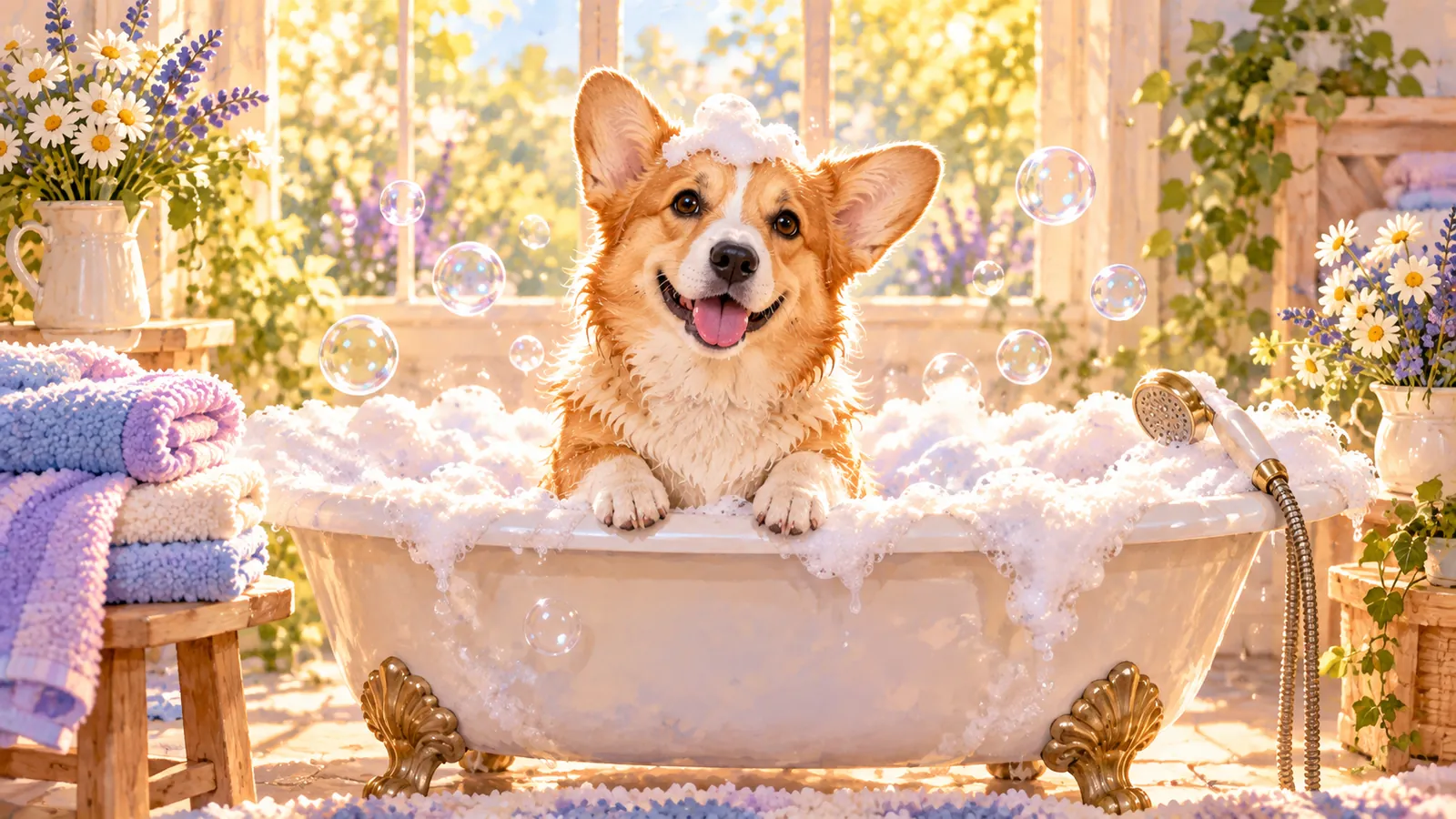
Grooming · Routine Hygiene
Bathing
A complete wash-and-dry routine tailored to coat type and skin comfort.
Most dogs don't need frequent baths. Every 4-8 weeks is typical, or when they are dirty or smelly. Bathing too often strips the natural oils that protect the skin and coat, which can leave skin dry and itchy.
The biggest mistakes are using the wrong shampoo, not rinsing thoroughly, and bathing a matted coat. Human shampoos are formulated for human skin and can irritate dogs; leftover shampoo causes itching; and water tightens mats, making them much harder to remove.
Always brush your dog before a bath. For thick, double, and curly coats, a thorough brush-out is the difference between a clean coat and a tangled, damp mess.
Drying matters as much as washing. Damp undercoat can lead to skin irritation, and thick-coated dogs can stay damp underneath for hours even when the outer coat feels dry.
Care details
Full-body wash using dog-safe products, with thorough rinsing and drying.
Difficulty: Easy
Estimated time: 20-45 minutes
Frequency: Usually every 4-8 weeks, adjusted for coat type, skin, and lifestyle. Follow your vet's advice for medicated baths.
Also called: dog bath
Supplies: dog shampoo (and conditioner for long coats), jug or handheld shower, non-slip mat for the bath, several towels, brush and comb, treats or a lick mat
Breed / coat: Double coats (huskies, shepherds, retrievers) need extra rinsing to get shampoo out of the undercoat and a long drying time. Curly coats (poodles, doodles) must be fully brushed out before a bath. Short coats dry quickly but can still hide shampoo residue.
Age: Young puppies often need only spot cleaning; keep full baths short and warm. Seniors may need help getting into the bath and a non-slip surface to stand on.
Why it matters: Removes dirt, allergens, and odours, and supports skin and coat health when done correctly.
How to do it
1.Brush first
Brush and comb out tangles and loose fur before the coat gets wet.
Done right: A comb goes through the coat to the skin without catching.
Time: 5-15 minutes
2.Wet the coat
With your dog on a non-slip mat, wet the coat with lukewarm water, starting at the neck and working back. Keep water away from the face.
Done right: Coat is soaked through to the skin.
Time: 2-5 minutes
3.Shampoo
Work shampoo into the coat, massaging down to the skin. Clean the face with a damp cloth rather than shampoo.
Done right: Shampoo reaches the skin all over the body.
Time: 3-5 minutes
4.Rinse thoroughly
Rinse until the water runs completely clear, then rinse again, especially under the legs and belly.
Done right: No slippery feeling or suds left in the coat.
Time: 3-10 minutes
5.Dry
Squeeze out excess water, then towel dry. For thick coats, use a hair dryer on a cool setting, keeping it moving and away from the face.
Done right: Coat is dry down to the skin.
Time: 10-30 minutes
6.Post-bath check
Brush through the dry coat and check the skin, ears, and paws.
Done right: Coat is clean, dry, and tangle-free.
Time: 5 minutes
Safety notes
Use lukewarm water, never hot. Avoid getting water and shampoo in the eyes and ears. Rinse until the water runs clear. Never leave a dog alone in the bath, and keep hair dryers on a cool setting and moving.
When to get help
Persistent itching, hot spots, redness, flaky or greasy skin, unusual lumps, or a rash after bathing.
Common mistakes
Bathing too often
Why it happens: Wanting a clean-smelling dog
Fix: Stick to every 4-8 weeks unless your vet advises otherwise, and spot-clean in between.
Using human shampoo
Why it happens: It is to hand
Fix: Use a shampoo made for dogs.
Not rinsing enough
Why it happens: Thick coats hide residue
Fix: Rinse until the water runs clear, then rinse once more.
Bathing a matted coat
Why it happens: Hoping the bath will loosen mats
Fix: Water tightens mats. Brush them out first, or ask a groomer to remove them.
Troubleshooting
Dog is itchy after a bath
Likely cause: Shampoo residue, harsh product, or bathing too often
What to do: Rinse more thoroughly, try a gentle shampoo, and bathe less often. See your vet if it continues.
Dog panics in the bath
Likely cause: Slippery surface, loud water, or previous bad experience
What to do: Use a non-slip mat, a jug instead of a noisy shower, and a lick mat with spread-on treats.
Dog smells again a few days later
Likely cause: Skin, ear, or dental problem
What to do: Persistent odour is worth a vet check.