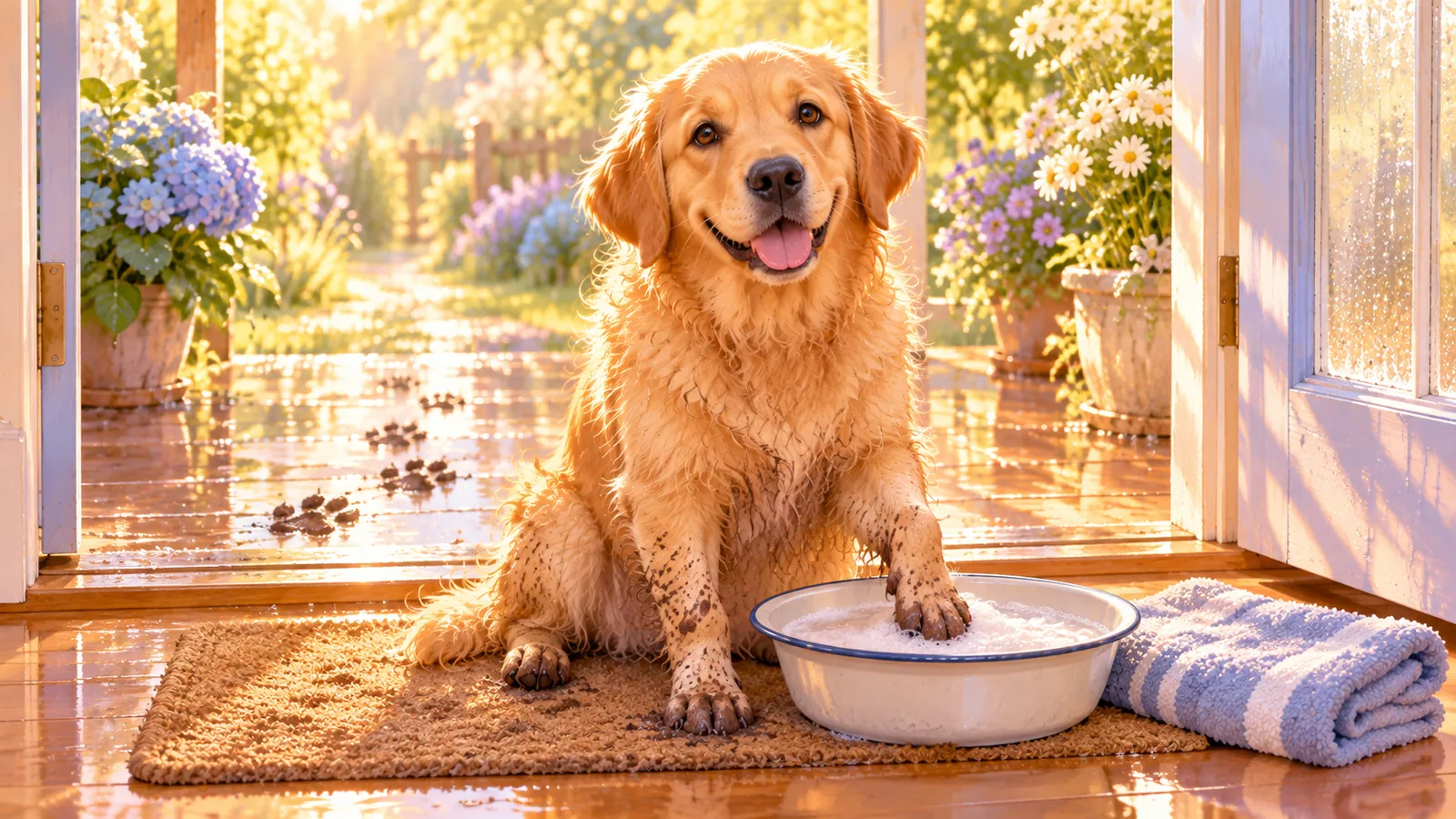
Grooming · Routine Hygiene
Paw Cleaning
A fast post-walk routine to remove irritants, debris, and residue from paws.
Paws pick up everything your dog walks through: mud, grit, grass seeds, pollen, road salt, de-icer, and lawn chemicals. Most of it is harmless, but left on the paws it can irritate the skin between the toes — and whatever stays on the paws usually ends up being licked off.
A quick wipe or rinse after walks takes a couple of minutes and doubles as a daily paw check. That is when you spot a grass seed working its way between the toes, a cracked pad, or a torn nail before it becomes a vet visit.
The most important step is the one most people skip: drying. Damp fur between the toes is a comfortable home for yeast and bacteria, which is behind a lot of the chronic paw licking vets see.
Make it pleasant from the start. A dog that has learned paw handling means treats will stand calmly by the door; a dog that has been wrestled into it will run and hide when it sees the towel.
Care details
Routine wipe or rinse of paws after outdoor activity, followed by drying and a quick inspection.
Difficulty: Easy
Estimated time: 2-5 minutes
Frequency: After walks, especially in wet, salted, or high-allergen conditions.
Also called: paw wipe, post-walk paw cleaning
Supplies: soft towel, pet-safe wipes or a bowl of lukewarm water, a paw-washer cup for muddy walks (optional), treats
Breed / coat: Long-haired and feathered breeds (spaniels, golden retrievers, doodles) trap far more debris between the toes and need deeper cleaning and more careful drying. Keeping paw fur trimmed makes this much easier.
Age: Start in puppyhood with short, treat-heavy sessions. For seniors, clean paws while they are lying down if standing on three legs is difficult.
Why it matters: Reduces irritant build-up, paw licking, and indoor mess, and catches injuries and foreign bodies early.
How to do it
1.Settle your dog
Have the towel and wipes ready by the door before the walk. Ask your dog to sit or stand on a mat and give a treat.
Done right: Dog stands or sits calmly while you reach for a paw.
Time: 30 seconds
2.Wipe or rinse each paw
Lift one paw at a time. Wipe the pads and the top of the foot, or dip the paw in lukewarm water and gently work debris out. Spread the toes to clean between them.
Done right: No visible mud, grit, or salt left on or between the pads.
Time: 20-30 seconds per paw
3.Check as you go
Look between the toes and at each pad for cuts, cracks, grass seeds, swelling, or redness.
Done right: You have looked at every pad and toe gap.
Time: 5-10 seconds per paw
4.Dry thoroughly
Dry each paw with a towel, pressing gently between the toes.
Done right: Fur between the toes feels dry, not just damp.
Time: 1 minute
5.Reward
Finish with a treat or a short game so paw cleaning stays something your dog accepts happily.
Done right: Dog stays relaxed or even offers paws.
Time: A few seconds
Safety notes
Avoid household cleaners, alcohol wipes, and human antibacterial wipes. Always dry thoroughly between toes. Rinse off road salt and de-icer promptly — they can irritate pads and may be harmful if licked.
When to get help
Redness, swelling, limping, cracks that bleed, a grass seed you cannot remove, a bad smell, or persistent licking of the same paw.
Common mistakes
Skipping the spaces between the pads
Why it happens: Only the visible surfaces look dirty
Fix: Spread the toes gently with your thumb and clean in between.
Not drying fully
Why it happens: The paw looks dry on the outside
Fix: Press the towel between the toes; damp fur there can lead to yeast and irritation.
Using household or human wipes
Why it happens: They are to hand
Fix: Use plain water or wipes made for pets. Many human products contain alcohol or fragrance that irritates skin.
Rushing a dog that dislikes paw handling
Why it happens: Wanting to get it done
Fix: Do one paw, reward, and build up. Forcing it makes the next time harder.
Troubleshooting
Dog pulls its paw away
Likely cause: Paw handling is uncomfortable or new
What to do: Practise touching paws for a second at a time with treats, away from walk time, before cleaning again.
Dog keeps licking paws after walks
Likely cause: Irritants left behind, damp fur, or allergies
What to do: Rinse rather than wipe, dry thoroughly, and see your vet if licking continues.
Pads are dry or cracked
Likely cause: Salt, cold, hot pavement, or rough terrain
What to do: Protect paws with wax or booties before walks and ask your vet about a pad balm.